

The economy is being driven by AI, and the data now suggests that it is taking over the economy. Let’s take a stroll through some interesting data on AI.
One of the more interesting charts I’ve seen recently is this one, on the contributing factors to real GDP growth:
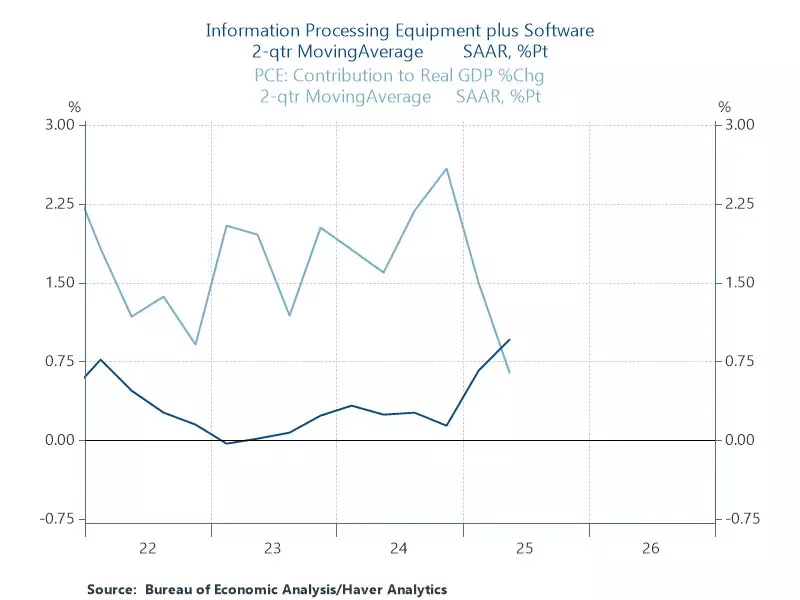
The “Almighty Consumer,” which traditionally makes up 70% of GDP, is contributing less to real GDP growth than AI investments. Our current GDP growth is being driven more by IT and software capital expenditures (“CapEx”) than consumption trends, which are down because of the tariff chaos causing people to alter their spending habits.
It’s real money being spent. “Hyperscalers” or the big tech titans and smaller, venture and private equity-backed companies trying to build data centers on every square inch of Earth they can get their hands on, are spending like crazy on this stuff. Here’s just the big players:
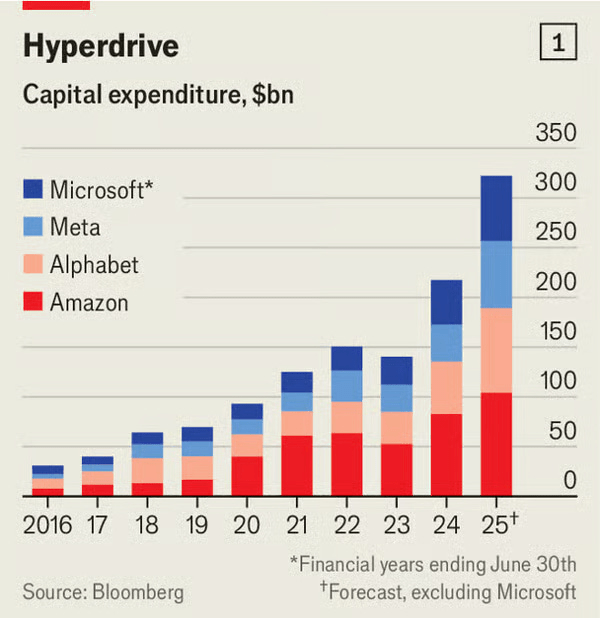
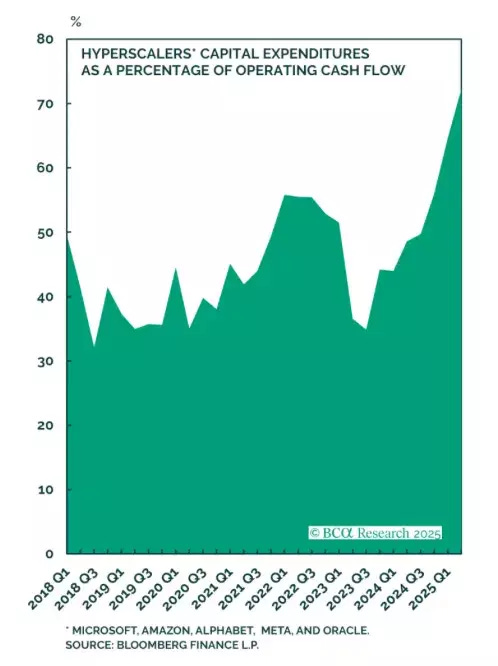
These “hyperscalers” are also increasingly burning through their cash piles, adding more fuel to the fire. This spending is what is causing that massive increase in AI-related economic growth, and it’s coming from cash piles built over the last decade where margins were high and profit came flowing like wine from the formerly FAANG, now Magnificent 7, pseudonyms for “tech oligopoly.”
They’re now at all-time records of CapEx as a percentage of cash flow:
This begs the question: who will the consumers be? All of this money is being spent, and significant portions of our economic growth is now hinged on the success of AI, but the question still remains as to who needs or wants this stuff.
Some techy people love it, but is it something you can sell to everyone?
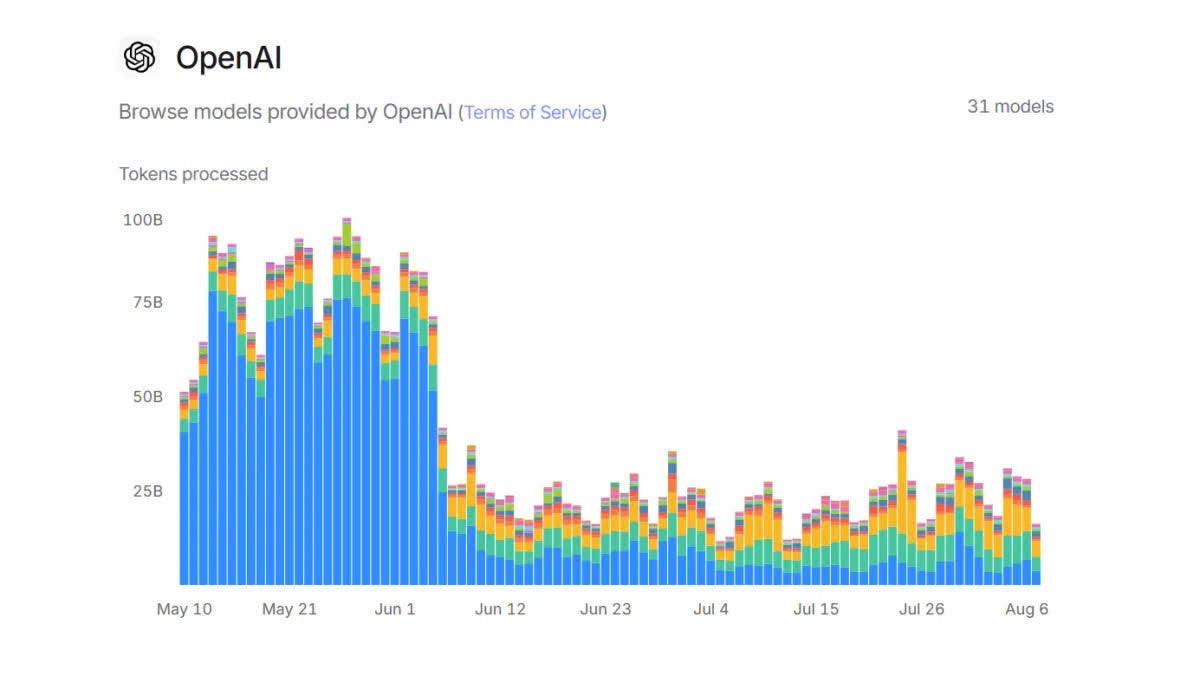
Half of the traffic comes from school kids cheating on homework. Here’s the drop-off of ChatGPT queries at the beginning of Summer, when kids get out of school.
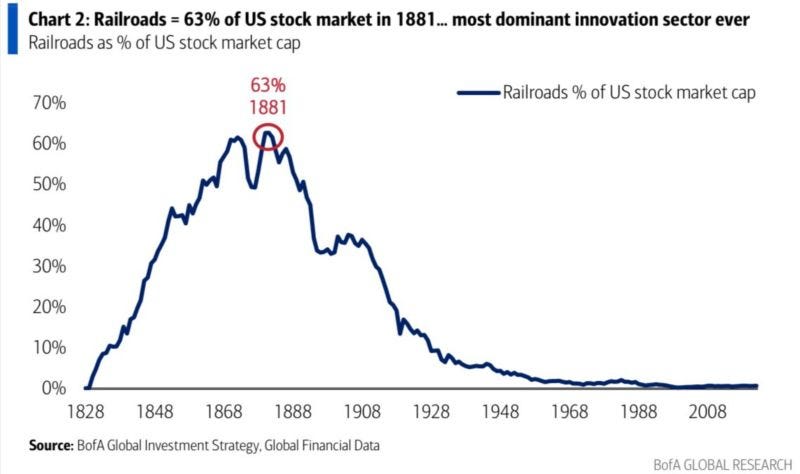
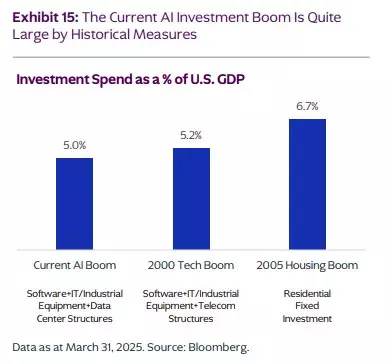
We’re nearly at bubble levels of infrastructure spending, one of the things we’ve seen throughout history across asset bubbles. As the bubble inflates, spending on bubble asset infrastructure increases.
In 1880, it was railroads.
In 2000, it was network infrastructure.
In 2005, it was housing.
In 2025, it’s data centers.
On the bright side, after bubbles pop, they usually leave a lot of cheap infrastructure behind that leads to high productivity gains. Society may benefit even if the asset bubble pops. Too bad for some of those shareholders, though.
The core issue: AI needs to become very profitable very quickly in order for these valuations (the size of the market, which is mostly driven by these hyperscalers) to make sense.
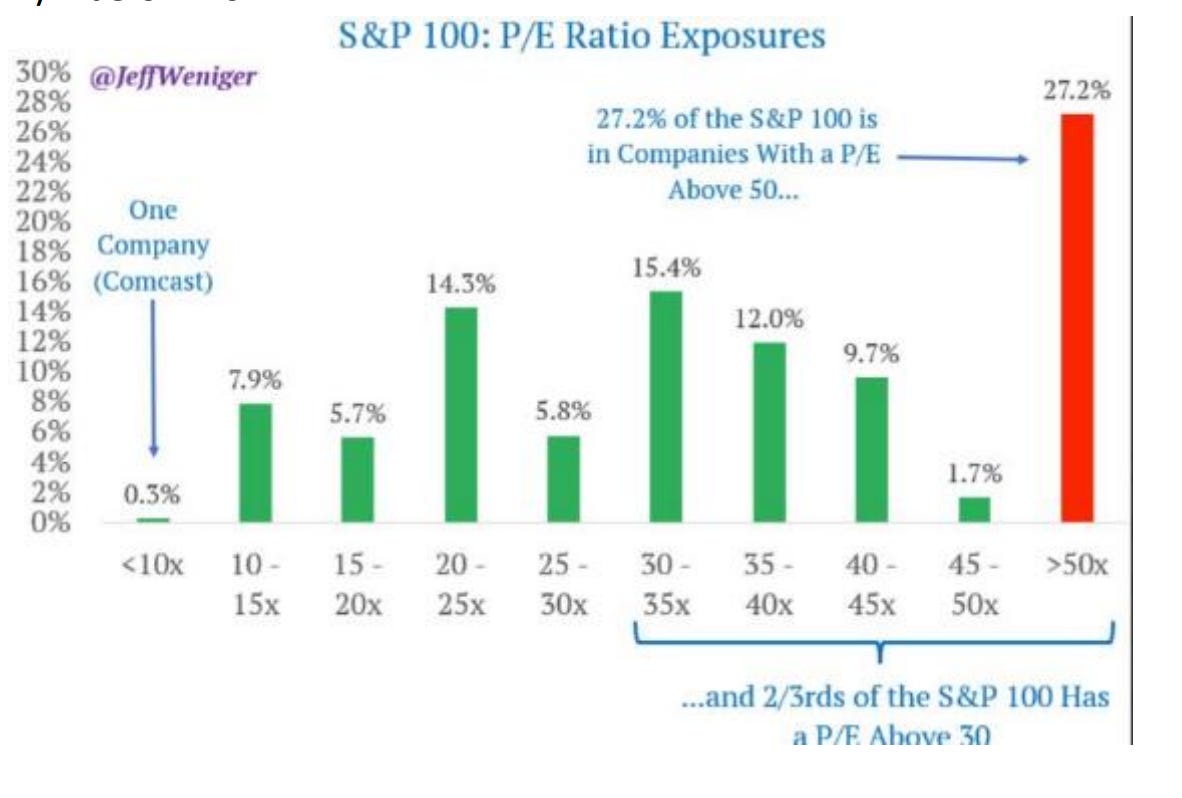
NVIDIA as an example, does have the earnings to prove itself, but that doesn’t apply across the board. That’s one of the things that’s different this time around. The tech titans among the hyperscalers are profitable.
But we see non-AI companies currently producing more revenue per employee than AI companies among middle market firms, telling us that many of them are still in the “cash burn” phase, which is the beginning of the death spiral.
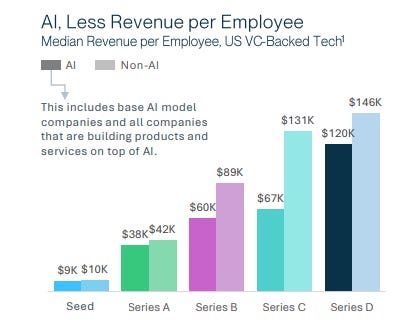
The bad news about running an AI company, you make no money. They’re having to figure out how to charge more for less, and it’s not going so well.
That’s why ChatGPT 5 is so bad. It’s really just a dumbed-down version of GPT 4, made to save costs over at OpenAI. Your $20/month subscription can’t pay the bills.
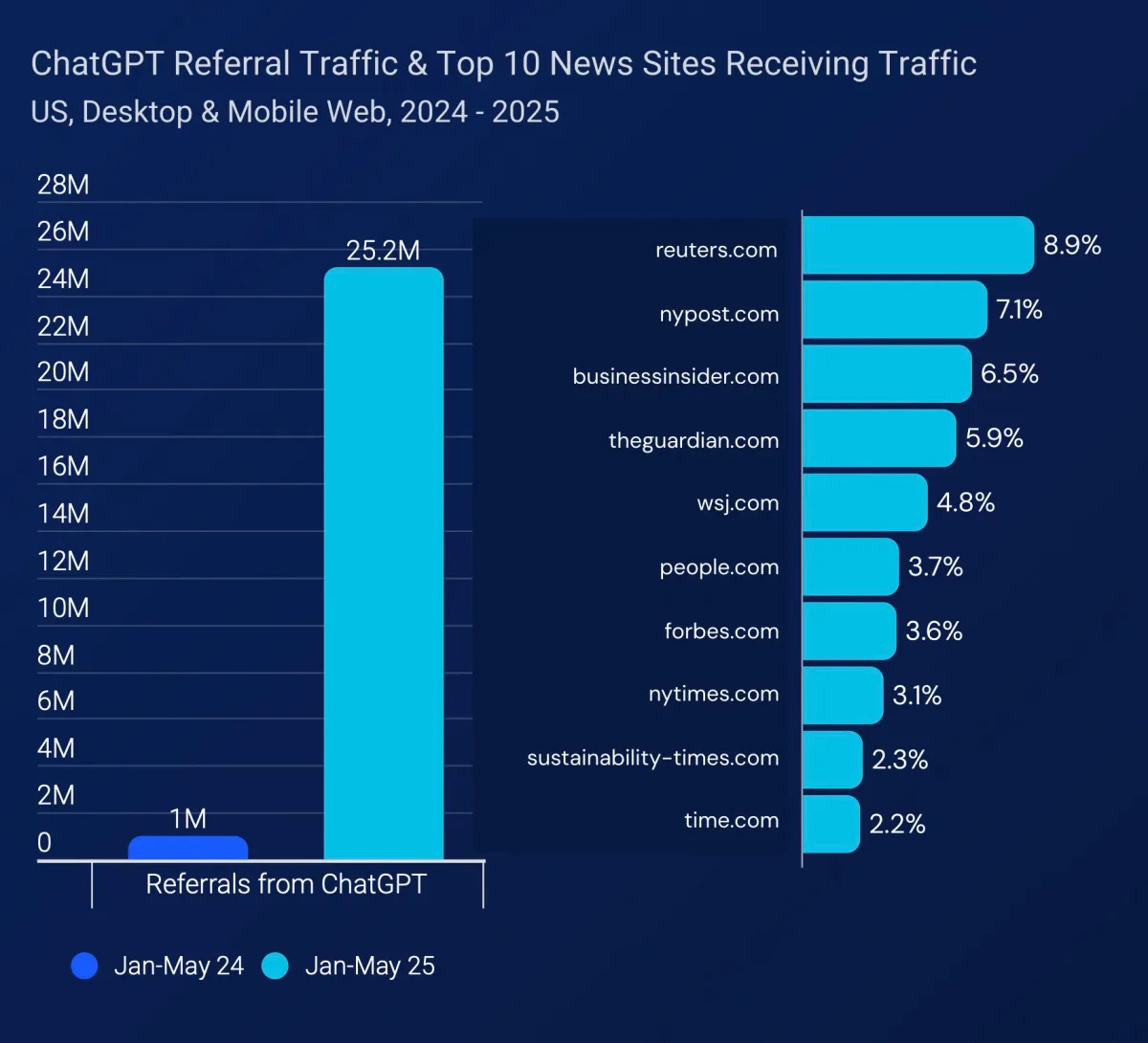
Good news about ChatGPT is that it’s doing its best to serve up actual news sources to people who query it. So at least if you decide you want a hallucinatory assistant to answer your question, it’ll give you actual journalism. That’s a plus.
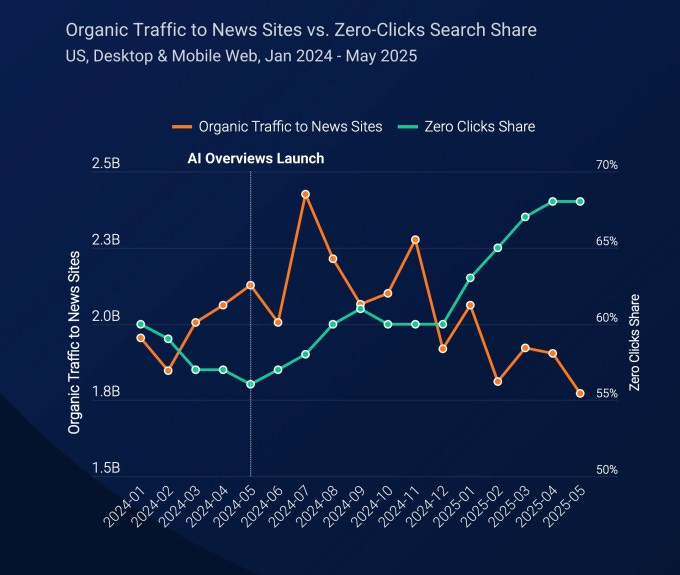
The downside is that organic traffic to news sites is down, as they are replaced by AI overviews, which have learned from the news, and paraphrased it to viewers.
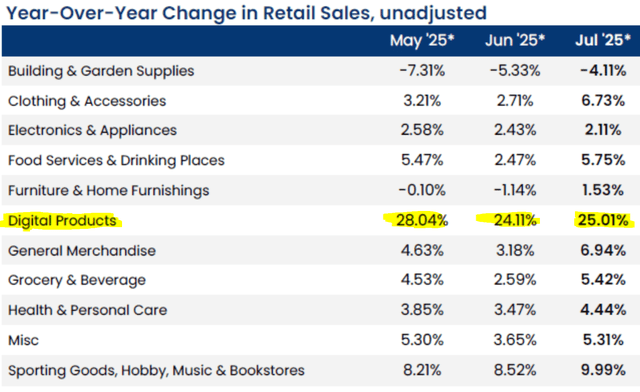
The Almighty Consumer, despite being fed all of this AI slop nonstop, is actually buying it too. The only product category in retail sales growing in the double digits is digital, a la AI subscriptions.
There doesn’t seem to be a slowing down, and why would there be? Investor hype is there, there still seems to be profit to be had, and maybe AI does change the world.
I doubt it, at least not in the way that techno bros and Silicon Valley celebrities paint it. LLMs like ChatGPT are word calculators, and they aren’t making a ton of money yet. By and large, they are loss-leader products just trying to keep the lights on long enough to be the big winner and be the one who achieves the next big breakthrough.
I think we’re likely to have more “DeepSeek moments” where efficiency breakthroughs shock markets, but that doesn’t mean any of them will pop the bubble.
We may be years out before a bubble pop. Knowing that we’re in a bubble doesn’t necessarily mean you can figure out when it’s going to bust.
The economy still has a ways to go. It’s not full AI yet.